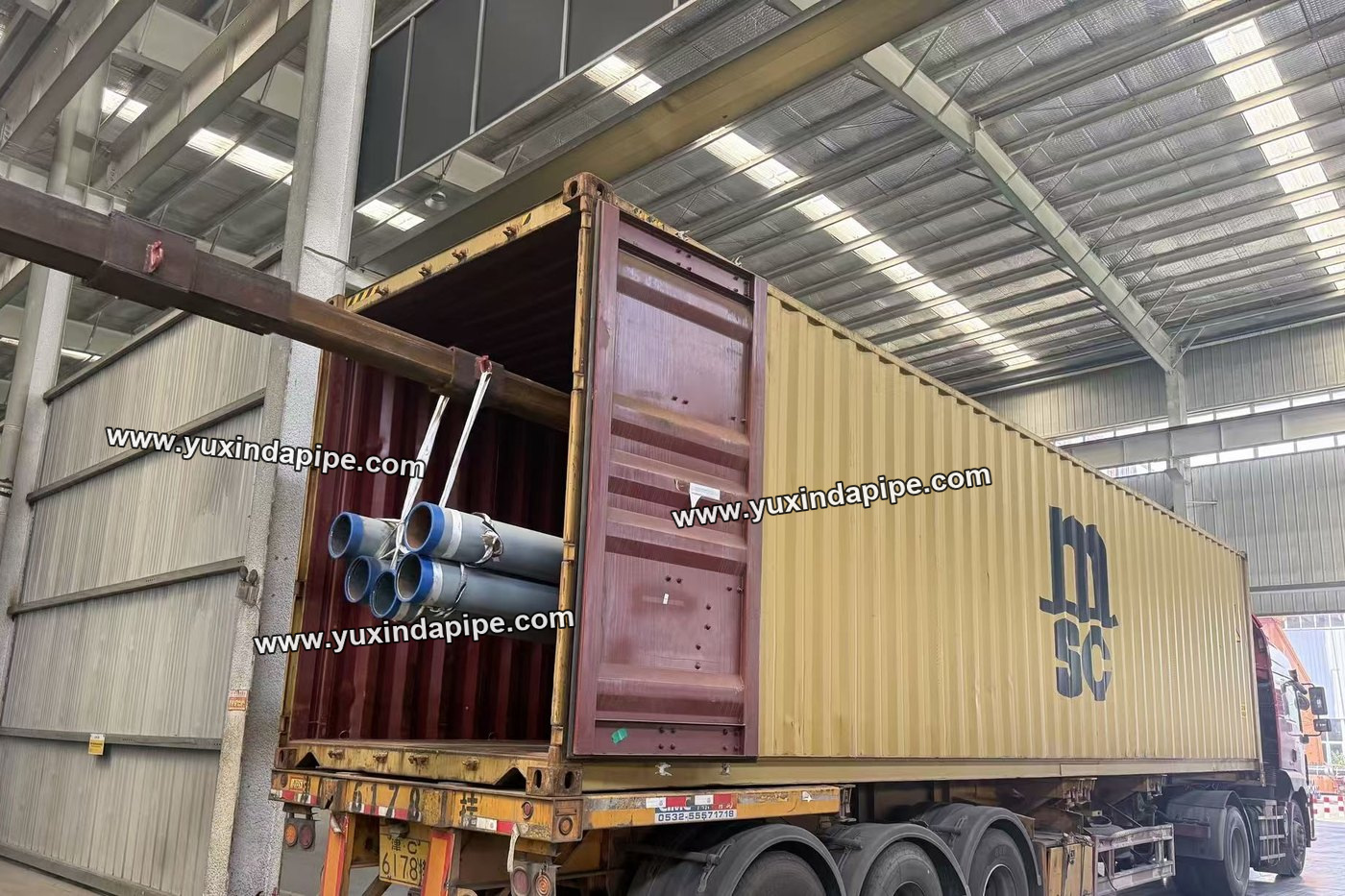
Direct answer
The published 28-metric-tonne MOQ is a commercial order threshold; it does not guarantee that every size, length or packing can fit one 40 ft container. Loading depends on OD, wall thickness, actual weight, piece length, bundling, lifting, route and port handling. Confirm the physical load plan in writing before production.
Steel pipe is sold by weight but constrained by geometry. A tonne of small-bore pipe occupies a very different space from a tonne of large-diameter or heavy-wall pipe. The loading plan must therefore use the actual line list, not only the total tonnage.
What the 28-tonne MOQ means
| MOQ controls | Production and loading still depend on |
|---|---|
| Minimum commercial order quantity. | Grade, size, wall thickness and production route. |
| Possible mixing of sizes and grades. | Mill scheduling, minimum rolling quantities and line-change efficiency. |
| A 40 ft container is the normal planning basis where dimensions and packing permit. | Actual container payload, internal dimensions, door opening, bundle shape, 6 m or 12 m length, lifting and securing. |
A 28-tonne order should not be treated as an automatic full container. Nor should a 12 m or large-diameter pipe be confirmed for container shipment without a real load check.
Calculate the demand before choosing packing
For steel pipe, a common theoretical-weight calculation is:
Multiply by total metres to estimate weight, then compare with actual weighing and the commercial invoice basis. Do not use approximate weight to ignore packing or container limits.
Container or breakbulk?
| Decision factor | Container | Breakbulk or deck shipment |
|---|---|---|
| Pipe length | Usually more suitable when the actual packed length and handling fit the selected container. | Can suit lengths or bundles that cannot be loaded and secured economically in a container. |
| Diameter and bundle shape | Space, weight and door geometry may limit the useful load. | Allows project-specific lifting and securing plans. |
| Small orders | Can reduce consolidation and handling complexity where the physical fit is confirmed. | May be uneconomic for small tonnage. |
| Delivery urgency | Depends on vessel schedule, container availability and route. | Depends on vessel availability, port, stowage and weather exposure. |
| Protection | Provides a closed environment but still needs dunnage and securing. | Requires coating protection, end protection, lifting and weather-risk controls. |
Information the loading review needs
- OD, wall thickness and theoretical or actual weight.
- Piece count and length, including random-length tolerance.
- End preparation and whether couplings or thread protectors are fitted.
- Coating type and maximum allowable point loads.
- Bundle arrangement, maximum bundle weight and lifting points.
- Loading port, destination port, vessel type and any transit constraints.
- Marking, fumigation, certificates and document requirements.
What to ask the supplier to confirm
Require the seller to show whether the proposal is container, breakbulk or deck shipment; the expected payload and bundle count; protective packing; loading responsibility; and any quantity that must be adjusted to meet physical or vessel limits. “FOB China” does not itself answer those questions.
A practical load-planning sequence
- Calculate theoretical weight for each line and total actual weight once measurement rules are agreed.
- Group pipe by OD, wall, length and coating so the loading plan reflects the real mix.
- Ask whether the selected container can accept the bundle geometry and handling equipment, not only the nominal pipe length.
- Check maximum bundle weight, lifting points, dunnage and protection for coated surfaces.
- Compare the delivered logistics cost against a breakbulk plan when the container cannot use its payload efficiently.
- Record the approved loading method in the quotation, booking instruction and final packing list.
For large projects, the loading plan should be reviewed together with the port, freight forwarder and receiver. A technically possible lift can still be commercially unsuitable if the destination lacks the required crane, berth or storage arrangement.
Connect the loading plan to the commercial offer
Review FOB versus CIF responsibility, check the size and weight reference, and send the actual line list through the API 5L RFQ checklist.